

In the competitive juniors apparel market, a sweater’s material choice is the difference between a one-time purchase and a loyal brand advocate. For wholesalers and retailers, understanding the tactile ‘hand-feel’ and fiber resilience is crucial for reducing return rates. Drawing from over a decade of production expertise, Delpnana breaks down the essential sweater materials that balance comfort, warmth, and retail performance.
With over ten years of expertise in children’s apparel production, Delpnana focuses on materials that perfectly balance softness, warmth, and durability. Our sourcing process strictly adheres to the OEKO-TEX Standard 100 for textile safety and ensures full compliance with CPSC (US Consumer Product Safety Commission) regulations. To guarantee long-term performance in school environments, we maintain a pilling resistance grade of 3-4 for all junior sweaters. This guide outlines common sweater fibers, their tactile feel, and how our core designs translate these materials into high-performing retail products.
What Are The Typical Materials Used In Juniors Sweaters?
Prior to exploring ease and feel, one benefits from grasping the materials that chiefly control the juniors sweater segment, since each fiber variety fulfills a distinct function according to weather conditions, application, and buyer hopes.
Natural Fibers In Kids Sweaters
Natural fibers including cotton and wool persist in broad application within juniors sweaters, particularly among brands emphasizing ease and skin protection, for cotton proves tender, airy, and mild, thus establishing it as a primary choice for daily outfits, whereas wool supplies enhanced heat and shielding that functions effectively during chillier periods.
Delpnana chooses natural fibers with precision, always bearing in mind children’s delicate skin and their everyday movement levels, and material procurement aligns with children’s clothing safety guidelines in the US and Australia, a factor that proves essential for B2B purchasers entering overseen territories.
| Material Type | Hand-Feel | Best For | Durability |
|---|---|---|---|
| 100% Cotton | Soft & Breathable | Spring/Daily Wear | Medium |
| Wool Blend | Warm & Textural | Winter/Outdoor | High |
| Acrylic/Poly Blend | Smooth & Elastic | School Uniforms | Extra High |
Synthetic Fibers In Kids Sweaters
Synthetic fibers like polyester or acrylic commonly serve to enhance form preservation and toughness, as these fibers withstand contraction, crease minimally, and generally maintain shades more vividly after multiple launderings, although they might not touch as plush as unadulterated cotton independently, yet they operate effectively within combinations.
Regarding volume retail and custom label requests, synthetic fibers assist in maintaining steady manufacturing and foreseeable expenses, particularly in sizable production batches.
Blended Materials For Comfort And Durability
Blended textiles merge the advantages of natural alongside synthetic fibers, so a cotton-polyester or wool-acrylic combination frequently yields even tenderness, heat, and prolonged service duration, an method that prevails in juniors sweaters crafted for classroom attire or regular employment.
Delpnana routinely applies blended threads to satisfy practical requirements from bulk sellers and traders who regard both ease and steadiness highly.
How Does Cotton Feel And Why Is It Popular?
Cotton holds its status as among the most dependable materials in children’s garments, since its touch and function render it particularly apt for juniors sweaters planned for routine application.
Softness And Breathability Of Cotton
Cotton touches tenderly against the skin and permits air to circulate without hindrance, which assists in minimizing excess warmth and unease, especially among energetic youngsters, and for juniors, ease grievances frequently originate at the collar or arm sections, where cotton delivers solid performance.
From a procurement perspective, cotton sweaters likewise fulfill parental anticipations for “secure” and recognizable materials, thereby facilitating smoother distribution across numerous regions.
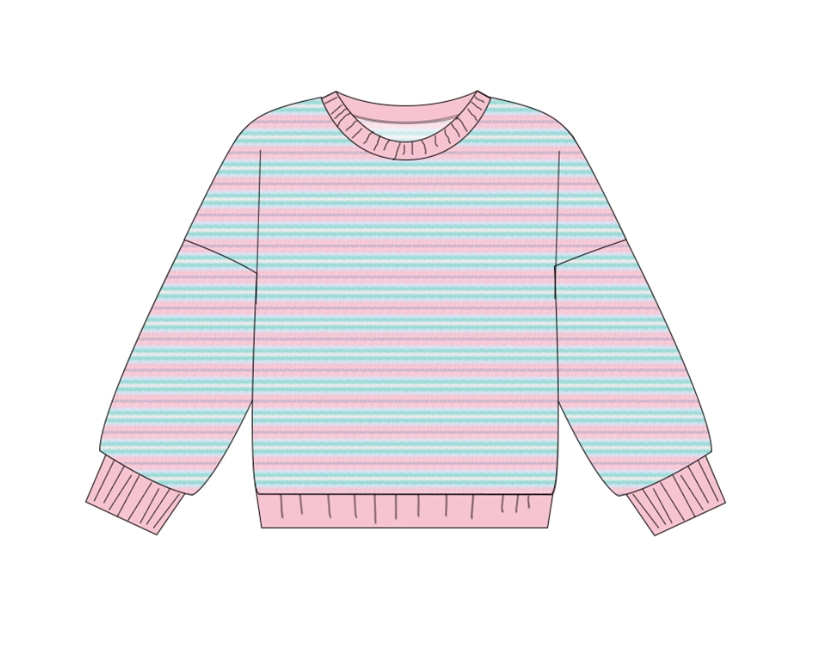
Delpnana Kids Long Sleeve Striped Sweater — Cotton Comfort
The Kids Long Sleeve Striped Sweater from Delpnana gets fashioned with everyday dressing as the central idea, for the cotton-founded weave provides a sleek tactile sensation without appearing excessively slim or burdensome, and the striped pattern introduces visual allure even as it preserves the framework straightforward and usable.
This pattern suits retailers focusing on educational ensembles, relaxed assortments, or intermediate-season stacking, since it coordinates effortlessly with slacks or skirts, rendering it a dependable product code for recurring purchases.
Why Cotton Is Great For Everyday Wear
Cotton sweaters launder simply, show reduced chance of skin irritation, and adapt well to extended wearing periods, so for B2B purchasers, cotton variants commonly yield fewer post-purchase concerns linked to scratching or unease.
Such a functional edge holds significance when furnishing markets, children’s outlets, or digital shops featuring substantial transaction volumes.
What Makes Wool Or Wool Blends Suitable For Winter?
As temperatures decline, heat emerges as the primary issue, and wool together with wool combinations gets selected frequently for juniors sweaters formulated for fall and winter assortments.
Warmth And Insulation Of Wool
Wool fibers inherently capture air, which supports preserving bodily heat, and even in lesser masses, wool sweaters sense more heated compared to cotton substitutes, thereby making them practical for frigid locales or periodic campaigns.
Nevertheless, unblended wool occasionally touches scratchy for youngsters, and consequently, combinations often gain preference in juniors attire.
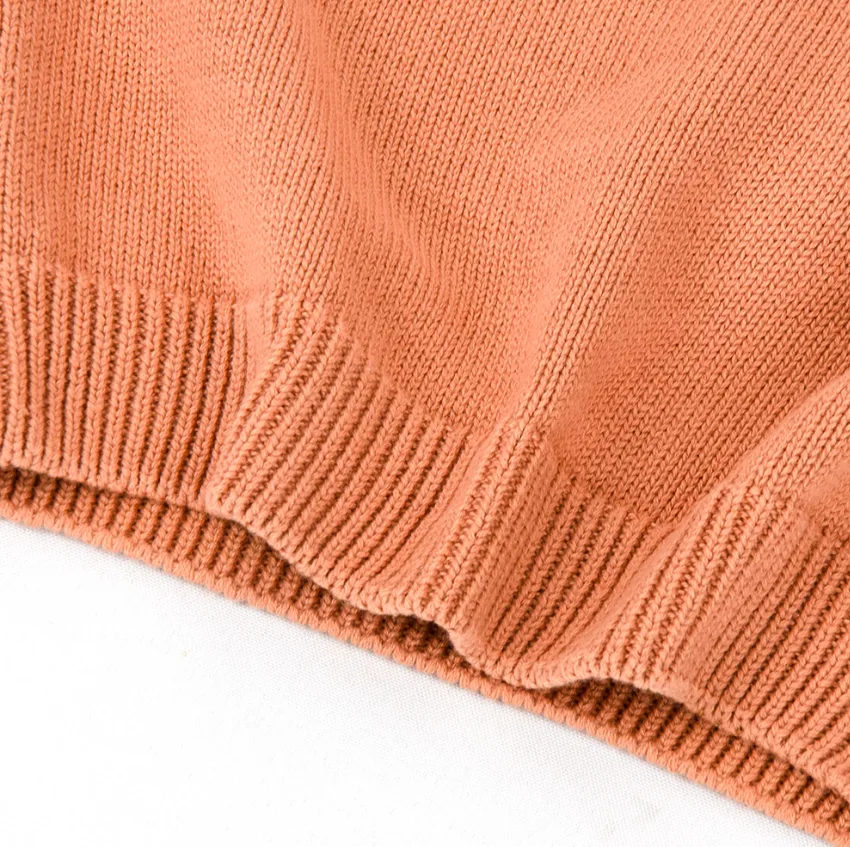
Delpnana Solid Knitted Round Neck Sweater — Cozy Knit Texture
The Solid Knitted Round Neck Sweater utilizes a firm weave that supplies heat absent excess volume, since its neat pattern functions over varied age ranges, thus suiting it for volume initiatives or brand groupings requiring adaptable essential pieces.
The circular collar sustains an uncomplicated adjustment, whereas the weave sensation contributes a warm touch, and this pattern integrates smoothly into winter series where ease and toughness carry equal weight.
Care Tips For Woolen Juniors Sweaters
Wool combinations typically demand softer laundering, yet contemporary thread processes aid in diminishing contraction and balling, while Delpnana supplies straightforward maintenance directions to bolster sellers and lessen patron objections.
From an enterprise angle, appropriate marking and fiber clarity assist in safeguarding brand standing.
How Do Synthetic Materials Affect Sweater Comfort?
Synthetic fibers assume an auxiliary position in various juniors sweaters, above all where framework and simple maintenance rank foremost.
Stretch And Shape Retention With Polyester
Polyester enhances flexibility and supports sweaters in retaining their contour following successive launderings, a point that carries weight for open cardigans and fastened patterns prone to form loss across time.
Although polyester in isolation might sense less ventilating, incorporating it with cotton or wool markedly elevates ease.
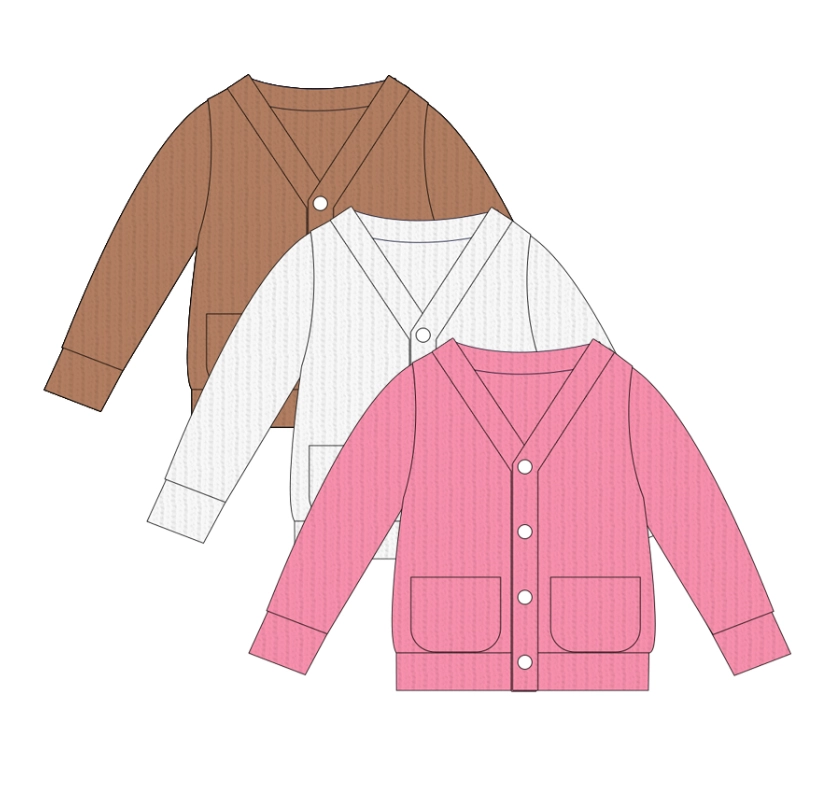
Delpnana Long Sleeve Cardigan V-neck Pocket Sweater — Smooth Synthetic Blend
The Long Sleeve Cardigan V-neck Pocket Sweater merges crisp contours with a useful textile arrangement, for the combined material imparts a more even exterior and enables the cardigan to remain orderly amid daily utilization.
This pattern accommodates sellers pursuing moderately refined juniors sweaters, fitting ideally for overlaying upon blouses or gowns, and the pocket element introduces utility devoid of surplus elaboration.
Benefits Of Easy-Care Sweaters For Kids
To parents, simple maintenance frequently equals ease in importance, since synthetic combinations shorten air-drying spans, oppose creasing, and secure shades more firmly, and for B2B purchasers, this converts into diminished refunds alongside improved patron responses.
What Material Features Should Parents Look For?
Apart from fiber category, particular material attributes shape acquisition choices and sustained fulfillment.
Skin-Friendliness And Hypoallergenic Options
Children’s skin responds more swiftly to coarse sensations or remnant substances, so Delpnana adheres to rigorous material criteria and favors skin-compatible threads, particularly for collars and hems.
This emphasis bolsters adherence in overseas venues and fosters assurance amid traders.
Durability And Washability For Active Kids
Juniors sweaters ought to manage activity, abrasion, and habitual laundering, while fortified weaving, reliable combinations, and verified pigments assist in prolonging item longevity.
From a logistics viewpoint, resilient sweaters curtail renewal periods and reinforce extended collaboration.
Seasonal Material Choices For Comfort And Practicality
Cotton variants align with spring and fall, wool combinations suit winter, and slim blends serve bridging climates, so presenting the appropriate material assortment permits brands to encompass additional commerce periods using fewer product codes.
Delpnana’s sweater assortment mirrors this equilibrated strategy, thereby simplifying associate endeavors in assembling thorough groupings.
Choosing the Right Material for Wholesale Juniors Sweaters
As a dedicated sweater manufacturer, we understand that for bulk knitwear orders, the material weight (measured in gsm) is just as critical as the fiber blend. A higher gsm provides the premium “heft” expected in winter collections, while optimized cotton-polyester blends ensure price competitiveness for mass-market retail. When selecting your next collection, consider the regional climate of your target market to balance insulation with breathability.
FAQ
Q1: Are blended sweaters safe for children’s sensitive skin?
A: Yes. When formulated correctly, blended sweaters can prove equally skin-compatible as natural fiber varieties, and Delpnana utilizes verified materials that conform to children’s clothing safety guidelines in principal areas.
Q2: Which sweater material is best for school wear?
A: Cotton or cotton-blend sweaters commonly represent the optimal selection for school, since they deliver comfort across prolonged durations and launder effortlessly, a trait that parents value.
Q3: Do synthetic fibers reduce sweater quality?
A: Not inevitably. Synthetic fibers augment toughness and form preservation, and when combined aptly, they uphold enduring utilization without forfeiting ease.